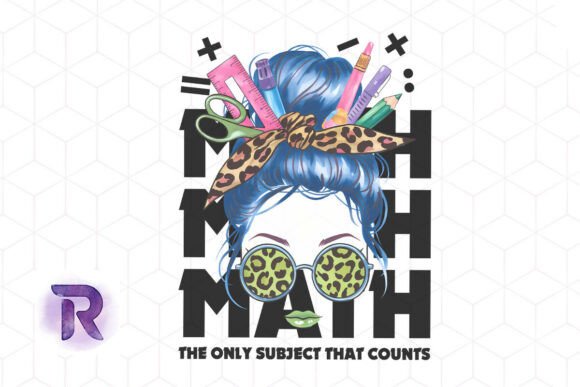
Reviewing the Mathematics Teacher PNG for Embroidery
As a designer who has spent years translating digital concepts into tangible thread, I approach every new mathematics teacher png with a mix of curiosity and caution. We all know that what looks crisp on a screen does not always translate seamlessly to fabric. When I first opened this file, my immediate goal was to determine if it held up under the scrutiny of real-world stitching. This is not just about aesthetics; it is about functionality, durability, and the final perceived value of the handmade product. For those of us running a craft business or selling as an Etsy seller, the difference between a design that sells and one that returns is often found in the details.
First Impressions and Visual Personality
The initial view of the mathematics teacher png suggests a clean, academic aesthetic. It avoids the cluttered look that plagues many educational graphics, opting instead for a balanced layout that speaks to professionalism. The mood is intellectual yet approachable, making it suitable for a wide range of recipients, from seasoned professors to enthusiastic student teachers. In the realm of Crafts and Graphics, simplicity is often harder to achieve than complexity. This design manages to convey its theme without relying on excessive ornamentation, which is a promising sign for embroidery.
However, a static image can be deceptive. My primary concern with any graphic intended for needlework is the translation of lines into stitches. Does the design rely on thin, fragile lines that might break during washing? Or does it have enough substance to hold its shape? The visual personality here leans towards clarity, which is essential for legibility, especially when scaled down for smaller items like caps or patches.
Real-World Application: The Custom Tote Bag Scenario
To truly test the viability of this asset, I imagined a specific client request: a custom embroidered tote bag for a high school math department head. This is a common scenario for small shop product creators. The tote bag requires a design that is bold enough to be seen from a distance but refined enough to look professional. Using the mathematics teacher png as the central element, I considered how it would interact with the canvas texture.
In this context, the design performs well as a focal point. Because the layout is relatively open, it allows the natural weave of the tote bag to show through, preventing the "cardboard effect" where too much thread makes the fabric stiff. If I were producing this as a finished product, I would likely pair the design with high-contrast thread colors—perhaps a deep navy or charcoal on a natural linen background. This enhances readability and gives the item a boutique feel rather than a generic promotional look.
Versatility Across Product Lines
Beyond tote bags, this graphic shows promise for various custom apparel items. For sweatshirt embroidery, the design’s structure allows it to sit comfortably on the chest or sleeve without distorting the knit fabric. It could also serve as an excellent embroidered patch design. Patches are increasingly popular for personalized gift markets, and a math-themed patch appeals to a niche but loyal audience. When applied to a denim jacket or a backpack, the rigid nature of a patch complements the geometric themes often associated with mathematics.
For those interested in baby embroidery, such as onesies for the children of educators, the design might need simplification. While the original file is versatile, tiny details can get lost on small garments. In such cases, scaling up the primary elements while removing finer decorative accents ensures the embroidery project remains durable through multiple wash cycles.
Technical Considerations for Stitching
Transitioning from a digital embroidery file to a physical object requires technical diligence. Since the product description highlights its use for printables and transfers, it is crucial to note that this PNG is a raster image. To use it effectively in machine embroidery, one must digitize it properly or ensure it is paired with compatible vector assets if available. If you are working directly with the PNG for sublimation or heat transfer before embroidering around it, edge definition is key.
When planning the stitch path, pay close attention to stitch density. Areas with heavy shading or complex intersections in the math symbols may require careful management to prevent puckering. I recommend using a cut-away stabilizer for stretchy fabrics like t-shirts and a tear-away for stable woven fabrics like aprons or pillow covers. This ensures that the hoop size constraints do not compromise the integrity of the design.
Be cautious with tiny lettering if the design includes text elements. On curved surfaces like caps or hats, small details can distort. If the mathematics teacher png includes fine print, consider enlarging the design or omitting the smallest text for headwear applications. Similarly, on textured fabrics like towels or fleece, low-contrast thread choices may cause the design to disappear. Always test your thread color contrast on scrap fabric before committing to the final piece.
Enhancing Brand Value and Customer Trust
For commercial embroidery professionals, the quality of the source image directly impacts the perceived value of the final item. A clean, well-balanced design like this contributes to brand consistency. When customers receive a holiday embroidery gift or a teacher appreciation item that looks polished and professional, it builds trust. It signals that the maker cares about precision.
Using this design in printable mockup previews can also boost engagement for online listings. High-quality design assets allow sellers to create realistic representations of their products, helping buyers visualize the end result. This is particularly important for digital product sellers who may offer the design for others to use. Clear, attractive visuals drive conversion.
Practical Designer Notes for Best Results
Before launching into production, keep these practical steps in mind:
- Test on Scrap Fabric: Always run a test stitch-out on the same material you intend to use for the final product. This reveals issues with tension and density.
- Check Licensing: Confirm whether the license allows for commercial embroidery sales. Understanding the terms is vital for legal compliance in your craft business.
- Evaluate Detail Level: Inspect the smallest elements of the mathematics teacher png. If they are thinner than 0.5mm, they may not stitch out cleanly without adjustment.
- Contrast Testing: View the design in black and white to ensure it holds up without color reliance. This helps in selecting appropriate thread colors for different fabric backgrounds.
- Stabilizer Selection: Match your stabilizer to the fabric weight. Lightweight fabrics need more support to prevent distortion from the fill stitch areas.
In conclusion, the mathematics teacher png offers a solid foundation for a variety of creative projects. Its strength lies in its clarity and thematic relevance. By approaching it with a designer’s eye for detail and a practitioner’s understanding of fabric behavior, you can transform this digital graphic into a standout handmade product. Whether for a tote bag design, a personalized apron, or a unique Etsy seller listing, this asset rewards careful preparation with professional results.